

Danny Boyle has never been a filmmaker particularly interested in letting his movies sit still. From Trainspotting to 28 Years Later, Boyle brings a unique energy to his work, and Ink is no different. The Netflix drama takes audiences back to 1969 London to explore the rise of The Sun newspaper, Rupert Murdoch, and the journalists who helped transform a struggling publication into one of Britain’s most influential tabloids. Based on James Graham’s stage play, Ink turns the birth of modern tabloid journalism into a fast, loud, and sometimes uncomfortable cinematic experience. If you’re a fan of Boyle’s work, then this will not disappoint.
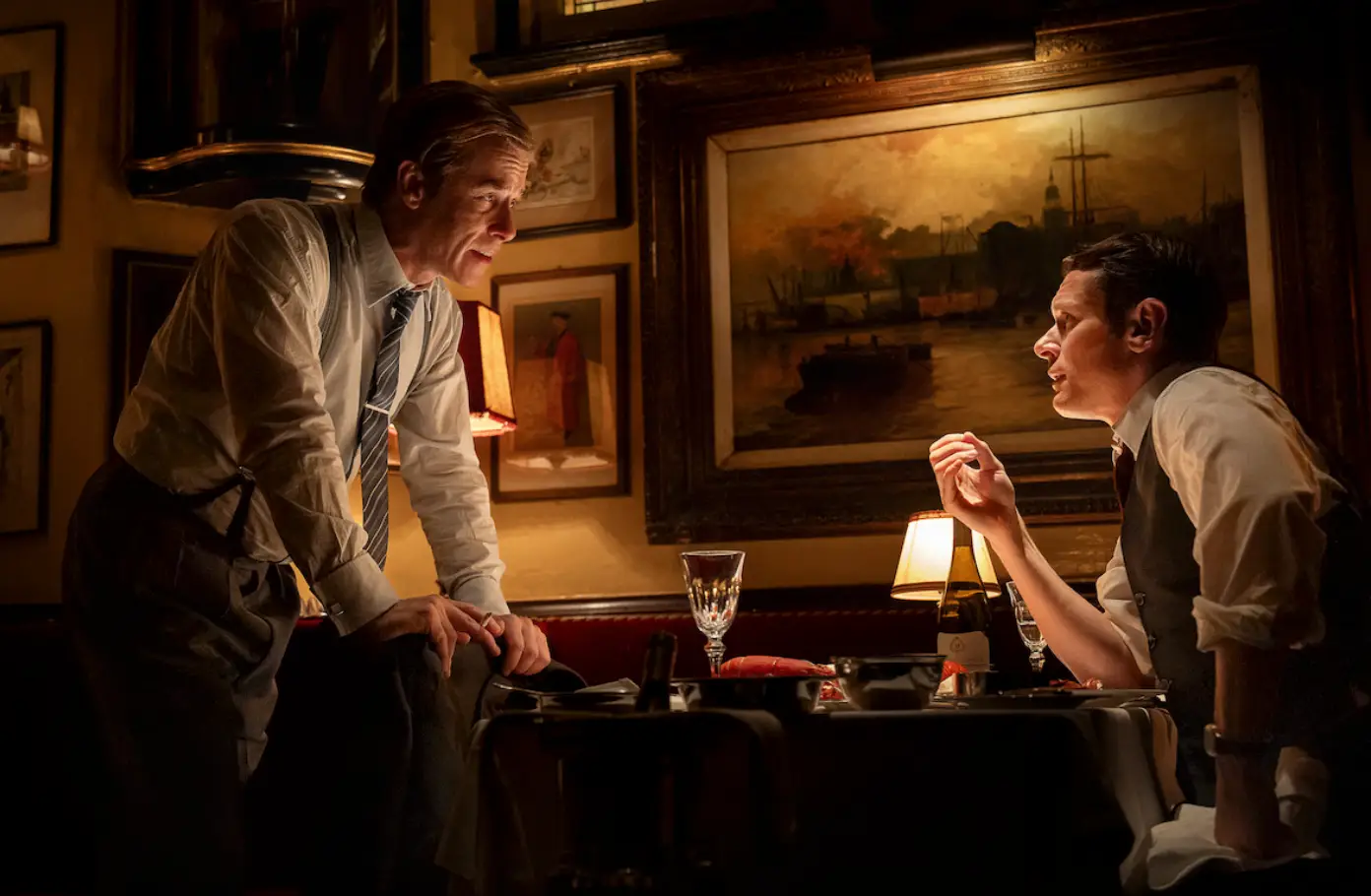
At the center of the story is Larry Lamb, played by Jack O’Connell, a fiercely ambitious editor who sees an opportunity to completely rethink what a newspaper can be. This marks the third collaboration of O’Connell and Boyle, as the two worked together on the 28 Years Later films. Guy Pearce plays Rupert Murdoch, the businessman who gives Lamb the freedom to chase that vision, while Claire Foy plays Jules Davies, a fictional composite character who provides another perspective on the rapidly changing newsroom.

O’Connell is the film’s biggest weapon, and the audience absolutely eats up every moment he’s on screen (much like he did in Sinners), myself included. There is an almost dangerous charm to his performance as he proves he has serious leading man potential. Lamb is ambitious, aggressive, and willing to push boundaries, but O’Connell never reduces him to a villain. You can understand why people would follow him even when his ideas become increasingly questionable. The performance gives Ink its human center while also making Lamb increasingly difficult to look away from.
Pearce takes a different approach with Murdoch. Rather than turning him into an exaggerated media monster, he plays him with restraint. His version of Murdoch is calculating but often surprisingly understated, which makes the relationship between Murdoch and Lamb more interesting. The two men share a desire to disrupt the establishment, but they don’t always agree on how far that disruption should go. That tension is where Ink works best.
If you’re a visual person, the manner in which the headlines crash onto the screen, coupled with the camera constantly moving, will rarely give you time to catch your breath. It’s stunning to say the least, and it quickly became my favorite aspect of the film. It is so simply exhilarating, like a rollercoaster of a time.

One issue is that Ink is dealing with such a fascinating subject that it occasionally feels reluctant to dig as deeply into it as it could. The film clearly understands that the transformation of The Sun changed journalism, but it sometimes feels as though it’s more interested in showing that transformation rather than fully unpacking its consequences.
That becomes particularly noticeable when the story moves into darker territory surrounding the kidnapping of Muriel McKay. The real-life case adds a disturbing dimension to the story and raises questions about the relationship between tragedy and sensational journalism.
Overall, Ink is entertaining, visually inventive, and anchored by a standout performance from O’Connell. Boyle takes a potentially dry story about newspaper history and turns it into something electric. The movie also succeeds at making the audience think about how the media industry learned to sell attention long before social media made that pursuit part of everyday life.
Out of the 15 movies I saw at TIFF, Ink landed in my top 3 easily. It’s so captivating that I walked out thinking about it for hours later. I’m banking on it being a hit when it lands on Netflix.
Ink hits Netflix on January 8th, 2027.
8/10


